
EA In-Game Advertising Value Exchange
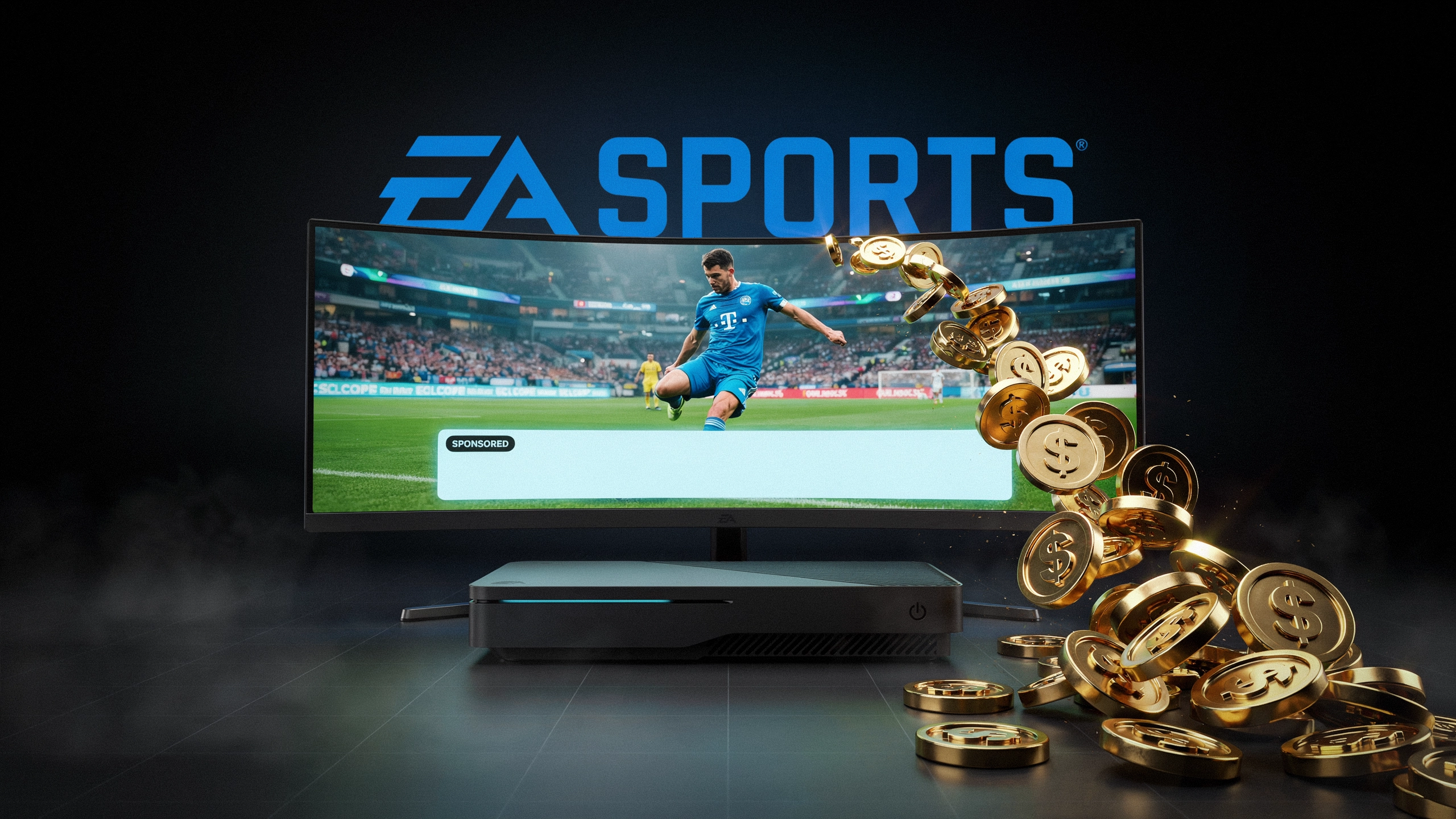

In 2020, EA slipped ads into "replay" moments in UFC 4, players revolted, and EA pulled them within days. Six years later, EA is trying again, and this time it built the infrastructure first.
EA Advertising, launched in June, puts brands directly into gameplay across EA SPORTS FC, Madden NFL, and College Football, with dynamic stadium signage, scoreboard overlays, in-game challenges, and branded vanity items. A new "EA SPORTS Partner Program" gives a curated set of advertisers, including Visa, Lowe's, Red Bull, Mountain Dew, Xfinity, and Peacock, access to hundreds of millions of engaged players. It runs on a proprietary ad server and SDK built on EA's Frostbite engine, with impression measurement aligned to IAB standards and verified by Integral Ad Science. Lowe's alone drove 987,000 games played and 200,000 completed challenges. Red Bull hit 128 million matches and 1.2 million completed objectives.
Chief Experiences Officer David Tinson framed the whole platform around one line: ads that "add value and respect the player experience," designed to "enhance, not disrupt." That's the entire bet.
Why this is bigger than one publisher's ad server
Dentsu counts 3.5 billion gamers worldwide, but gaming still captures only 5% of global ad spend, according to reporting from The Current. Dentsu's own research found 66% of gamers feel positively about in-game brands when the integration fits the game. Comscore data shows 34% of console gamers have searched for a product after seeing it in-game, and roughly 20% have bought something, both up meaningfully year over year. Gen X gamers convert most often, with millennials close behind, a reminder that the buying audience is older and broader than gaming ad spend has historically assumed.
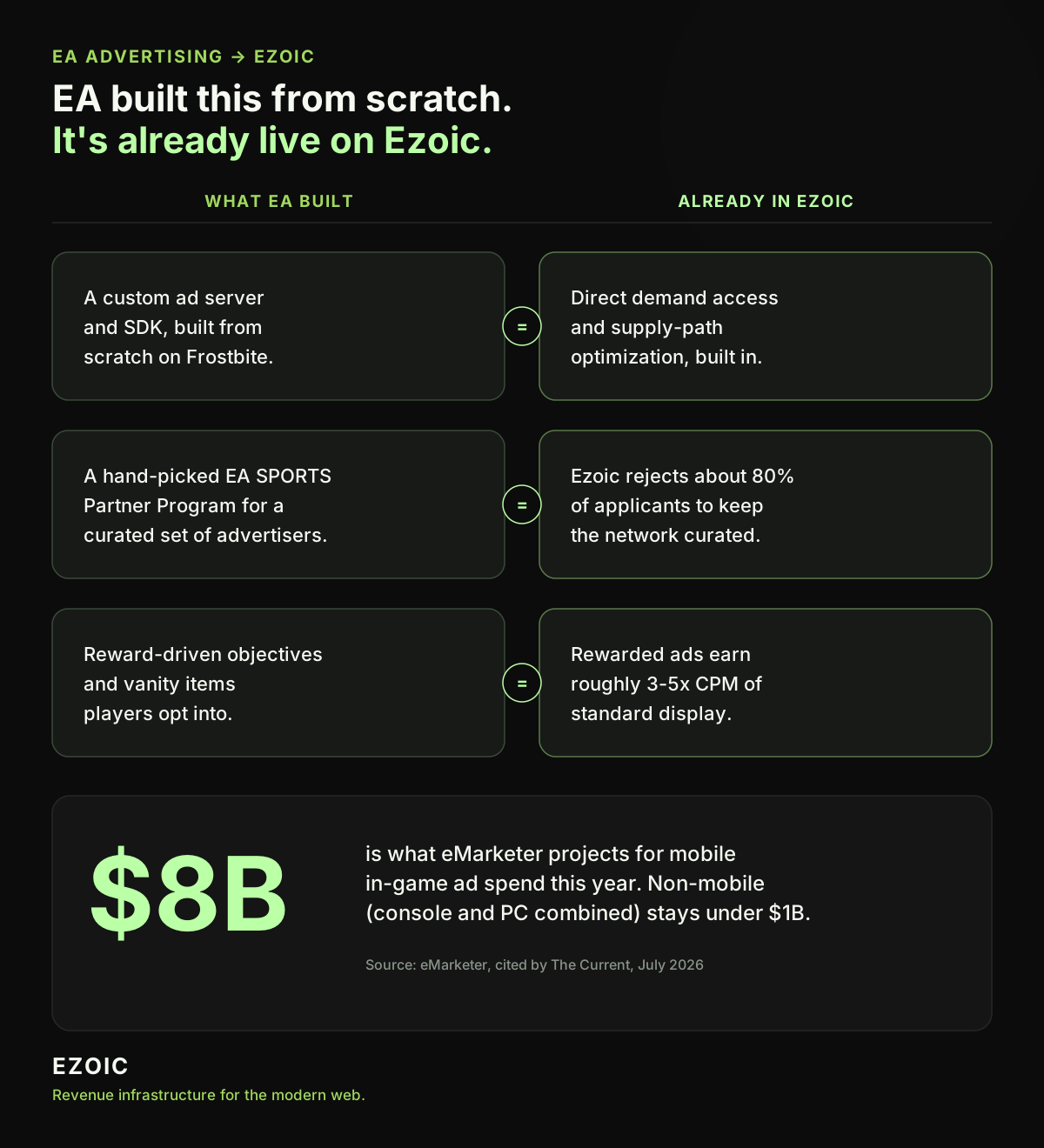
Here's the part that matters most for anyone monetizing an app, game, or site outside the console world. eMarketer projects mobile in-game ad spend will clear $8 billion this year. Non-mobile, console and PC combined, stays under $1 billion. The demand for engaged, opted-in ad experiences is already concentrated in mobile and app environments. EA is racing to catch up on the console side, standing up a purpose-built ad server, a Frostbite-native SDK, an IAS measurement partnership, and a hand-picked roster of advertisers, all in the same year.
That's the actual signal in this announcement. Brands will pay a premium for placements that feel authentic and don't interrupt play. Measurement matters just as much, which is exactly why EA brought in Integral Ad Science. EA had to build all of that from scratch. Web apps, mobile games, SaaS tools, and publishers building an audience right now don't have to.
The exchange EA is describing is the one rewarded ads already run on
EA's "enhance, not disrupt" language describes a value exchange. Players get reward-driven objectives and items worth unlocking. Advertisers get engagement instead of a skip button. Ezoic's rewarded ad infrastructure runs on that same principle, at a fraction of the lift. A user opts into an ad in exchange for something they actually want, such as a feature unlock, extra game lives, a content reveal, or bonus in-app currency. Publishers and app developers running rewarded formats typically clear 3–5x the CPM of standard display, because the user chose to engage, because players are choosing to engage.
EA's build is scoped to its own sports titles. Rewarded ads work for any digital business, including mobile games, web apps, SaaS free tiers, and content sites.
For a mobile game or app sitting on that $8 billion in mobile ad demand, this is the practical version of EA's bet: let players opt into value, and get paid a premium for it.
Premium demand doesn't require building EA's ad stack
The other half of what EA built also matters: a proprietary ad server, IAB-aligned measurement, an IAS verification partnership, and a hand-picked "Partner Program" of brands willing to pay for premium access. All of it exists to answer one question. How does an advertiser trust that an audience is real and worth a premium?
That's the exact question Ezoic's supply-side infrastructure exists to answer for web apps, games, publishers, and SaaS businesses that aren't Electronic Arts.
Inventory on the platform carries a Jounce Media "Premium" classification, and Ezoic rejects roughly 80% of the sites that apply to keep the network curated and brand-safe. That's the same trust signal EA is building with IAS and a curated partner roster of its own.
The wider ad market is moving in that exact direction. Buyer spend is shifting away from the open exchange and into curated, deal-based supply, because advertisers now want fewer intermediaries and cleaner signal more than they want raw reach. Ezoic builds that curation in from the start, running supply-path optimization instead of a long chain of programmatic middlemen, with demand sourced through the SSP and DSP relationships Ezoic manages directly on a customer's behalf.
EA can justify building all of that because it has 120 million monthly players and a market cap to match. Most web apps, mobile games, SaaS tools, and publishers can't build the same thing on their own and now, they don't need to. The infrastructure Ezoic operates gives a business without EA's engineering budget access to the same caliber of premium, verified demand.
The takeaway for anyone building an audience right now
The data already showed this appetite before EA's announcement. Gamers accept ads when there's a real value exchange, and mobile is already where the ad dollars are concentrated. Brands will pay more for placements they can trust, and EA is now betting its flagship franchises on exactly that model.
None of that is exclusive to console sports titles. It applies to any web app, mobile game, SaaS product, or publisher with an engaged audience willing to trade attention for something worth having.
Ezoic's take: the exchange of value is the whole game. Rewarded formats and premium, verified inventory work because everyone in the exchange actually wins. EA just spent a year building the infrastructure to prove it at console scale. It's already live for everyone else.