
The Systems Ezoic’s Been Building (And Why They’re Paying Off)


The web businesses generating meaningful revenue today don’t look like the “publishers” most of ad tech was originally built for. Discovery is (and has been) changing. Search is being abstracted and products, tools, apps, and interactive experiences are replacing pages as the primary way people engage with the web. Monetization systems optimized for pageviews and impression volume are now being tested by environments defined by users and their intent.
At Ezoic, we’ve always been a little nerdy about that distinction but it’s worked in our favor and benefitted our customers along the way. From the beginning, our mission has been rooted in helping digital businesses build sustainable, independent revenue. This reflection piece is meant to highlight what we’ve prioritized and what those dedicated efforts look like in reality.
Building for the Web as It Actually Exists
The way people discover and interact with information online has fundamentally changed. Analyses from DataSlayer and Seer Interactive show consistent declines in both organic and paid click-through rates as Google’s AI Overviews and generative summaries expand.
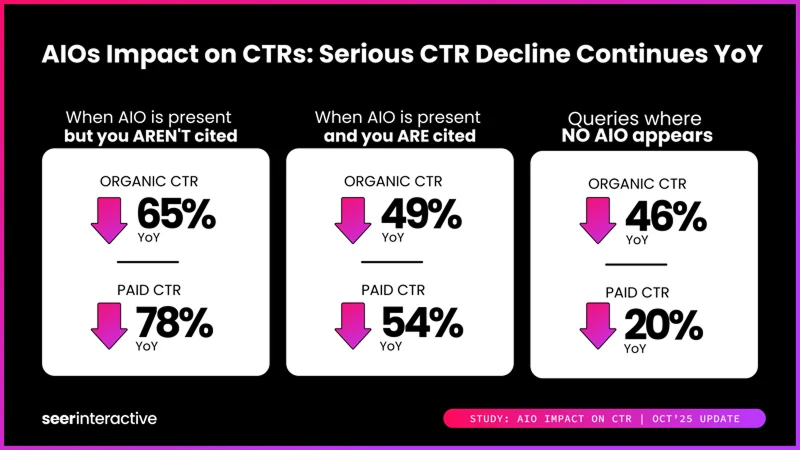
Over the last 12+ months, organic CTR fell by roughly 40–50% across queries, while paid CTR declined by ~20%, regardless of whether AI Overviews were present. This reinforces the inevitable fact that a behavioral change is largely at play. More questions are being answered before a user ever reaches a website if they reach one at all. With fewer clicks to go around, this creates obvious challenges.
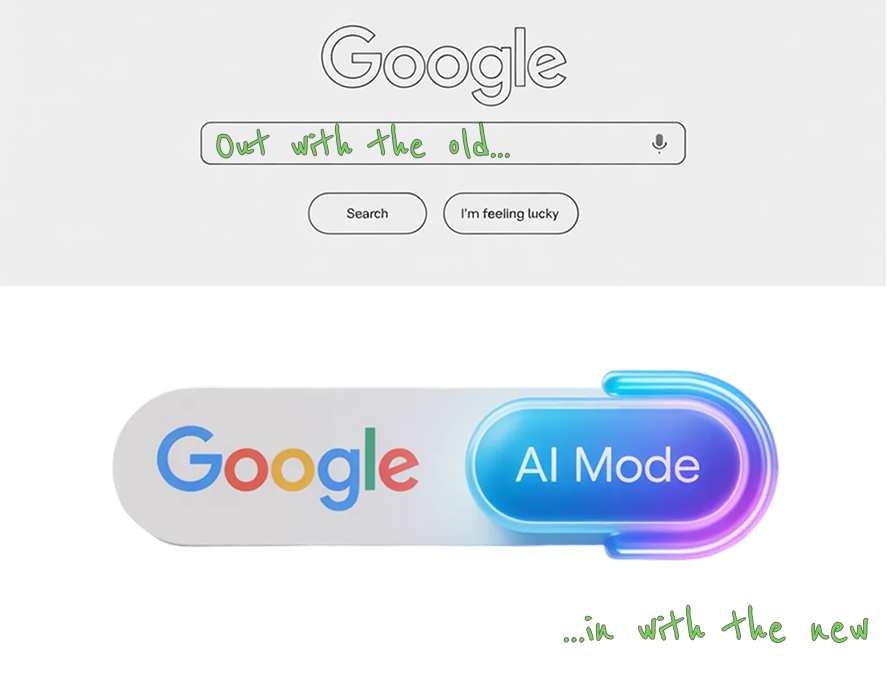
The web strategy that once revolved around earning those highly coveted blue links and capturing a click no longer reflects how value is created. Discovery still happens, but it’s abstracted. Information is summarized and resolved upstream, while users gravitate toward tools, apps, and products that solve problems directly or offer ongoing utility. One of the clearest ways to visualize this change is to compare declining search CTR alongside rising revenue per engaged or identified user. As clicks become less predictable, monetization depends on what happens after a user arrives.
Many of the fastest-growing sites we work with are no longer optimizing around traffic alone. They’re building experiences that behave like products by managing users instead of visits and measuring revenue per user.
This reality has guided our priorities. We’ve focused on supporting businesses where monetization compounds through engagement, retention, and lifetime value. When discovery is less predictable and entry points are fragmented, infrastructure needs to perform regardless of how a user arrives or how often they return. This is the environment we’ve been building for and it’s where the web is headed.
Why Evergreen Value Has Shifted
Click-driven strategies that once powered growth are no longer enough. Sites built solely to chase traffic like the infamous Made-for-Advertising (MFA) properties, now generate minimal long-term value. Even evergreen content has lost its influence as AI summaries and aggregators surface the same information before users reach the page.
We’ve seen firsthand how quality now drives outcomes. Sites that focus on real user engagement and intentional experiences outperform those optimized just for impressions. Metrics like authentic engagement and other UX signals are far more predictive of revenue per user than raw traffic alone.
These trends explain something important: supporting product-like businesses, first-party data strategies, and agile infrastructure, respond directly to how the modern web is evolving into.
Ad Tech in a More Competitive Market
Advertisers have been raising the bar on what they expect from every dollar they spend. As budgets continue to absorb spend from other channels, you might assume that this automatically leads to higher CPMs across the board. In reality, the opposite is true. Programmatic buying is now available everywhere including streaming platforms, podcasts, apps, and emerging formats, giving advertisers more choice and more leverage.
Ad revenues have become less volatile than in the past, and overall trajectories have largely followed the same long-term patterns we’ve seen for years. Growth is coming from proving value at every point of the supply chain.
First-party data is where we’ve seen meaningful separation.
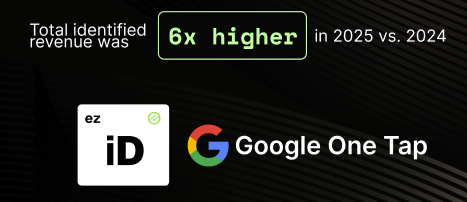
Identity has become central to how value is assessed and priced as advertisers demand more precision and accountability. This has driven the rise of integrator services that aggregate identity signals across sites and apps to create more addressable, higher-quality audiences. We invested heavily here by securing unique partnerships, building identity infrastructure, and streamlining how first-party data is implemented and activated. The goal was about making high-quality identity automated and usable at scale, so businesses could participate in higher-value demand without needing enterprise-sized teams. In 2025, we saw total identified revenue across the platform was 6x higher than in 2024 and growing as we make way for 2026.
Competition is everywhere. The real advantage to stand out comes from better signals and that’s the environment we’ve been operating in and designing for.
Making Advanced Infrastructure Approachable
As web businesses evolve into products, the operational bar has risen with them. Identity, consent, experimentation, and monetization are no longer enterprise-only concerns and most teams still don’t have the engineering or data resources.
This gap shows up in practical ways. Founders want to understand who their users are without adding friction. Operators need authenticated signals that work across ad partners without stitching together multiple tools. Growing apps and sites want to test and iterate without redeploying infrastructure every time.
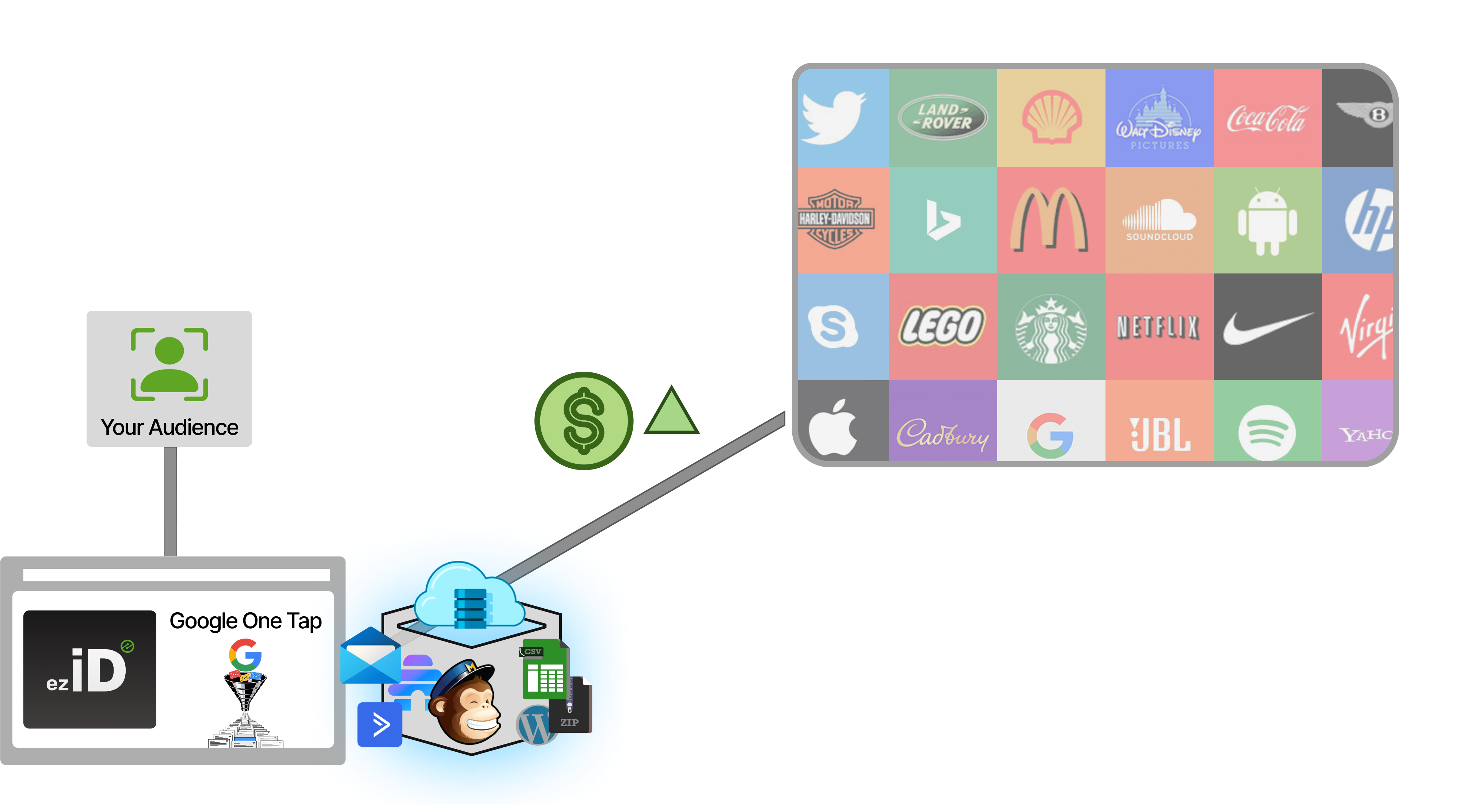
Our tools like Google One Tap gained traction because they solve a simple problem: enabling authenticated, first-party relationships in a way that fits naturally into the experience. ezID plays a similar role by connecting user signals to demand across providers without custom integrations or ongoing management. These tried-and-true solutions will proactively meet the highest paying advertisers earlier and faster. A recent internal study indicated that sites with identified traffic see around 15% + higher EPMVs on average and most sites were seeing over 110% improvement in U.S. EPMV for identified users.
When it comes to implementation, lightweight JavaScript and single-tag setups have become the default, reducing friction during onboarding and increasing the flexibility to design freely. Faster testing, fewer dependencies, and easier iteration are what make advanced systems usable at scale.
The overarching theme: outcomes are directly tied to technological velocity. When infrastructure works in the background instead of slowing teams down, it scales naturally across various business models and traffic sources.
Rewarded Ads and Intentional Engagement
Engagement that users actively choose is becoming the currency of modern monetization and rewarded ads are leading the way. Across games, apps, and interactive experiences, the most successful platforms are those that focus on deliberate, opt-in interactions rather than passive impressions.
When a user voluntarily watches an ad in exchange for value (e.g. extra lives in a game or premium features in a tool), the engagement is explicit. That signal is far more valuable to advertisers than traditional impressions, while publishers earn incremental revenue without compromising user experience. The result is a win-win-win scenario, a triple threat where everyone (publisher, user, advertiser) actually benefits.
Ezoic has built the technology to make this type of engagement accessible. Our AI Assistant Setup tool (currently in beta) analyzes individual pages, directories, or entire sites, recommends where rewarded ads make sense, generates scripts, and can apply them directly for testing and review. The goal was to remove friction so high-quality engagement can be adopted without guesswork.
This shift isn’t hypothetical. The economics of rewarded ads are already reshaping monetization strategies. For a deeper dive, The Economics of a Growing Rewarded Ads Market, where our CMO, Tyler Bishop, explores why engagement is becoming the new defining metric and why rewarded ads are emerging as a serious revenue play.
Rewarded ads reflect a broader discipline that smart publishers are adopting: test systematically, implement quickly, and focus on the exchange between value delivered and engagement earned. That’s exactly why we’ve prioritized engineering resources and automation in this area so our partners can ride the wave rather than miss it.
The web isn’t slowing down, and neither are the businesses building for it. We’ll continue doing what we do best and that’s building thoughtfully, challenging convention, and delivering the right solutions for how the web really works. That’s how we’ve led so far and it’s how we plan to keep pushing the industry forward heading into the rest of the year.