
Display Viewability Hit 87%. We Cut 25% of Impressions to Get There.
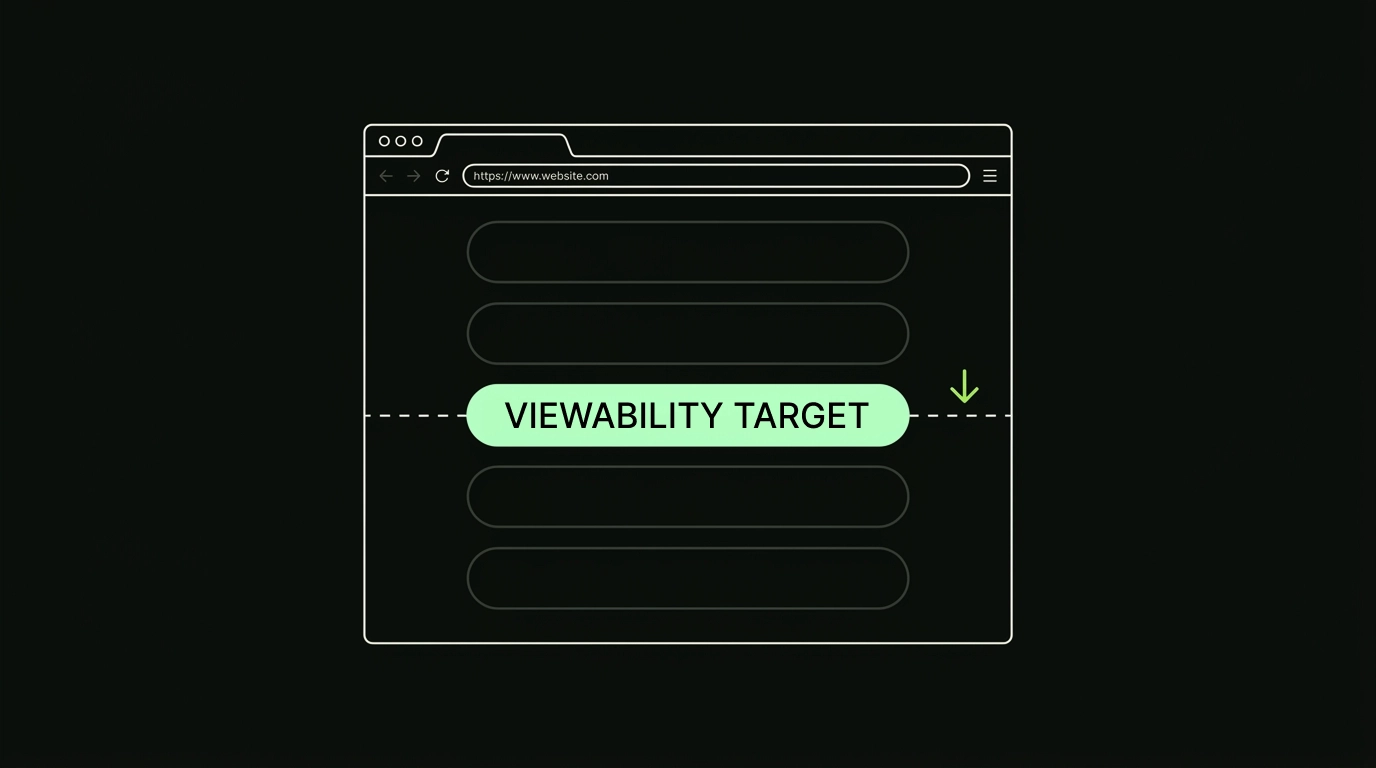

Starting February 17, 2027, Google will only count a display impression once an ad has actually started to render, not the moment it begins loading. Impressions that load but are never actually seen won't count anymore. The principle is simple: if nobody could have seen it, it shouldn't count.
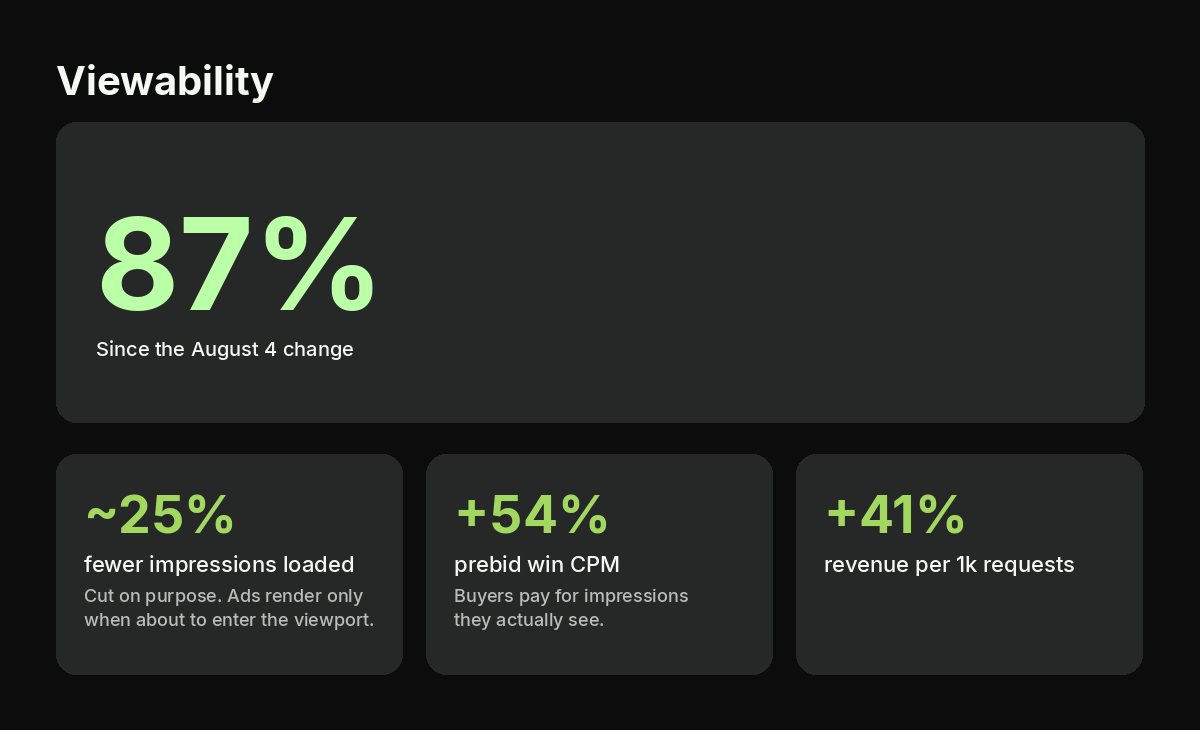
Ezoic got there first. On August 4, we stopped loading display ads that readers were never going to see. Ads now render only when they're about to enter the viewport instead of the moment the page loads, and that one change cut display impressions by about 25% across the board. Viewability is up to 87%. Revenue held rather than falling with the impression count.
This touches four groups at once: the buyers bidding on the inventory, the publishers whose pages carry it, the demand partners routing bids into the auction, and the platform making the call to cut volume in the first place. Most changes that help one of those groups cost another but this one didn’t.
What Changed for Buyers
Before August 4, a meaningful share of the display impressions we sold never entered a reader's viewport. They loaded, sat below the fold, and were never seen by anyone. That's not a creative or bid-strategy problem. It's an inventory problem, and it sits upstream of anything a buyer controls.
So we moved the fix upstream too. Ads now render at the moment they're about to come on screen. Prebid win CPM followed, up about 54%. Advertisers aren't bidding on inventory they'd never get credit for anymore. They're paying for something that's actually there.
What Changed for Publishers
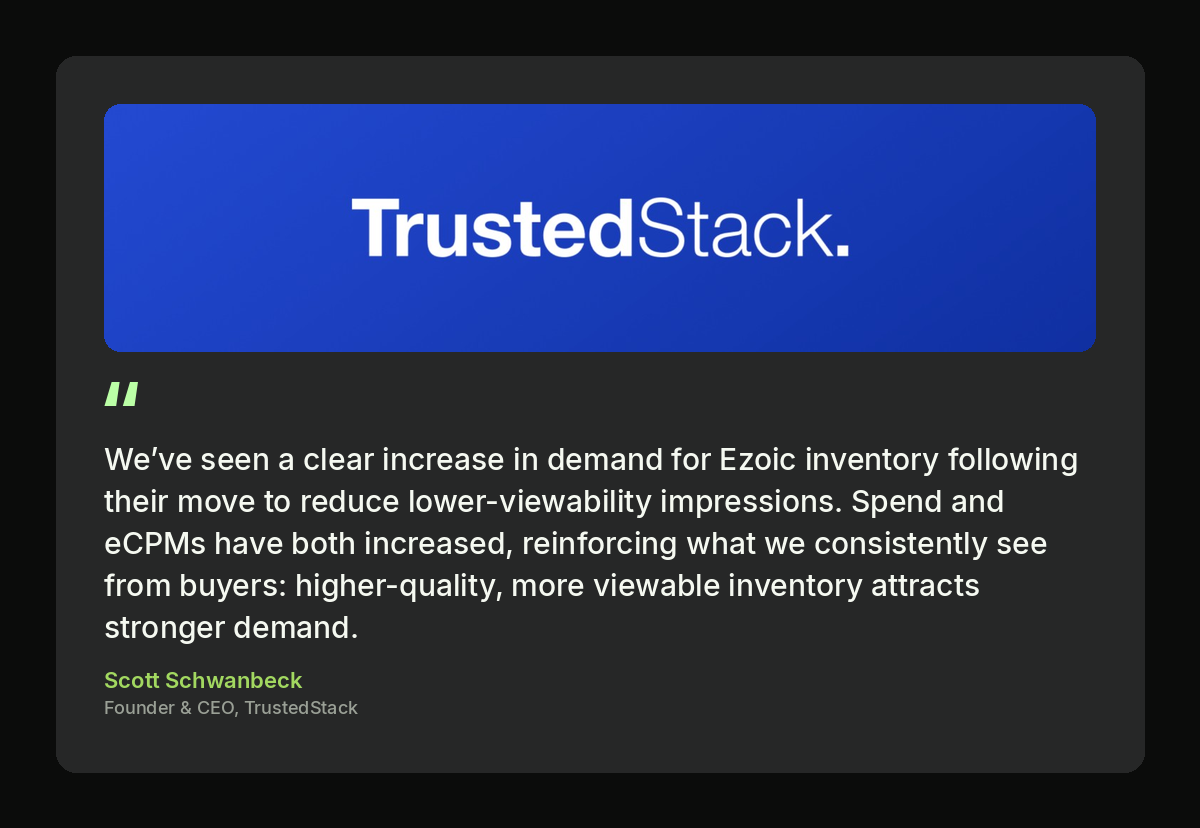
The math publishers worry about most when a platform cuts inventory is simple: fewer ads usually means less revenue at the end of the month. That's not what happened here. Pages got cleaner and ad counts dropped, but publisher earnings held. The CPM lift did the work the volume cut would otherwise have undone.
Pro tip: if a platform tells you it's cutting inventory to improve quality, ask what happens to CPM in the same window. A viewability gain that doesn't move price is a vanity metric.
What Changed for Our Demand Partners
The inventory we kept after August 4 is inventory people actually see, and that shows up in bidder efficiency. We care about the quality of the requests we send upstream: more profitable for DSPs, better ROAS for buyers, because they're bidding on impressions people see. That's the work behind why we’re leading on revenue per request (RPR).
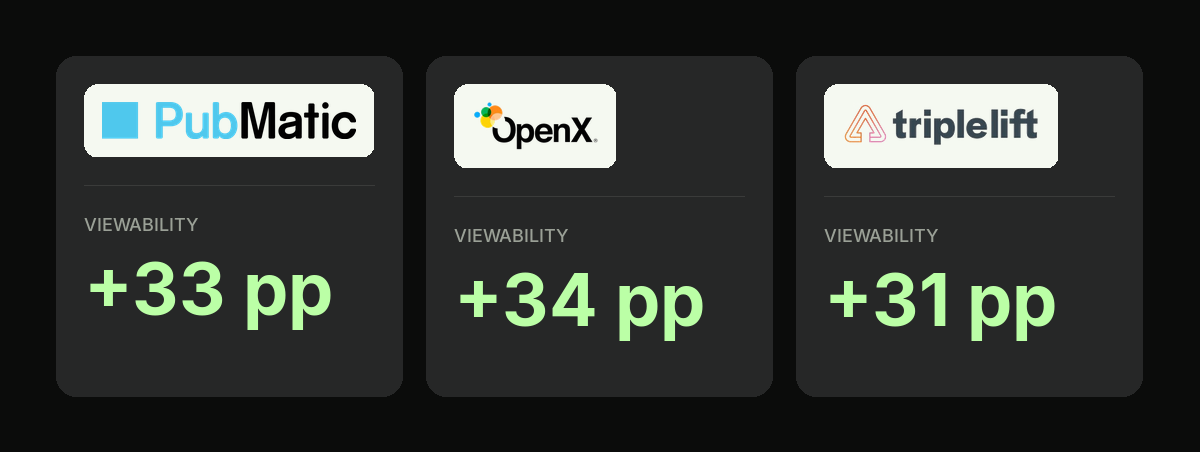
For PubMatic, OpenX, and TripleLift, the shift looks the same. Viewability rose 31 to 34 percentage points into the low 80s, and RPR and win CPM moved up directionally alongside it. Three partners, three shapes of the same result. We changed what we sent them to bid on, not how they bid.
Why This Is the Long-Term Play
We took inventory out of the market that advertisers should never have been asked to buy, and we accepted a real volume cut to do it. The loop is straightforward: higher viewability drives higher CPMs, higher CPMs make demand partners more efficient on the requests we still send, and that efficiency protects publisher revenue through a smaller footprint of ads. Skip the viewability work and there's no CPM lift to fund the cut. Skip the cut and viewability never moves. The loop only works end to end, which is why it's durable.
Most platforms optimize for more impressions, because impressions are the easiest number to grow and the easiest one to sell as a plan. We optimized for seen impressions instead. Publishers keep the revenue and lose the wasted units. Advertisers stop paying for ads nobody saw, which builds more durable demand for what's left. Cleaner pages are also a better reader experience, not an SEO play, just a page people are more willing to stay on.
Wrap Up
Google's begin-to-render change lands in February 2027 and pushes the industry toward billing on impressions that were actually rendered. Ezoic publishers won't be catching up when it arrives. Fewer ads, 87% viewability, higher CPMs, and revenue intact: that's what the shift looks like when you make it six months ahead of the mandate.