
Zero Friction, Maximum Gain: How AI Ad Optimization Is Quietly Driving Higher Earnings
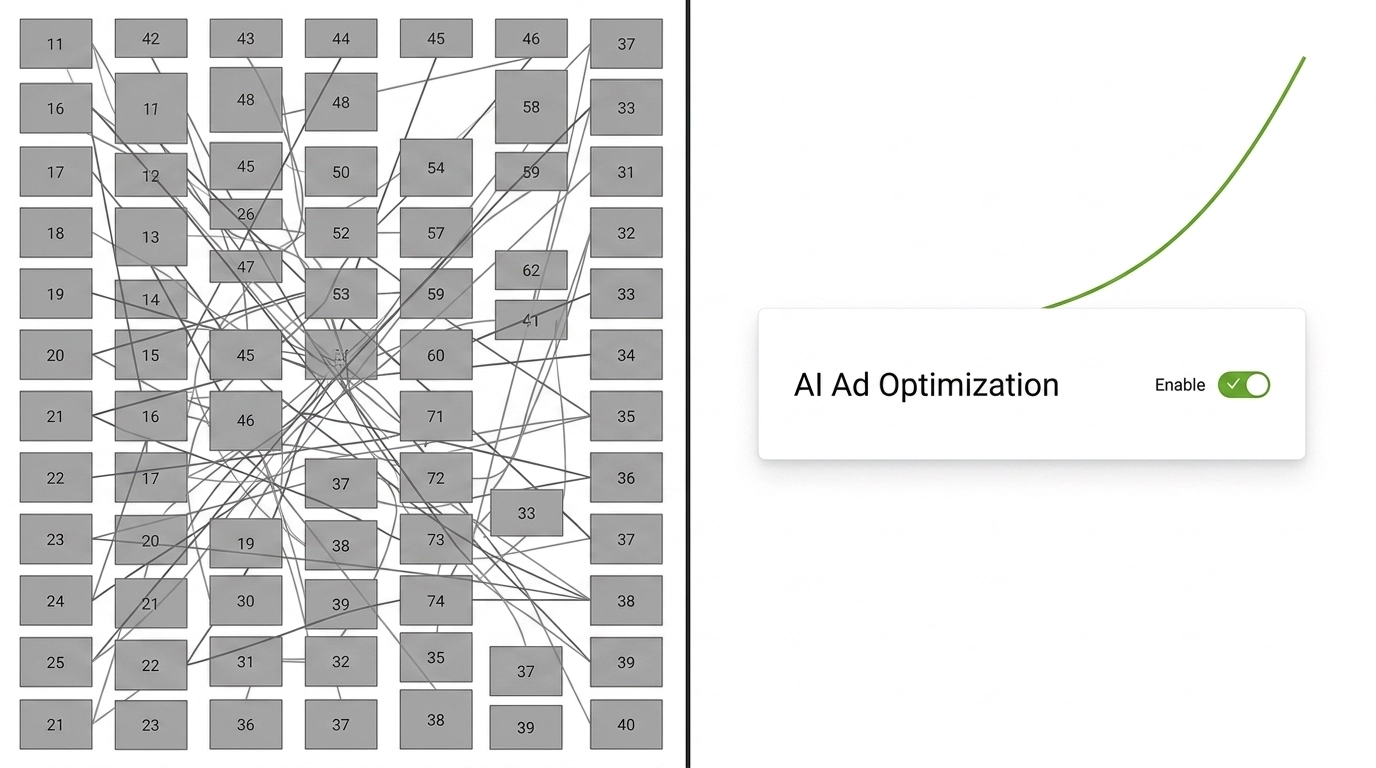

For most publishers, ad optimization has felt like a balancing act: hours spent placing placeholders, tweaking floors, and reading snapshots of data, hoping the setup is "right" for the current market. The market doesn't stand still, and neither should optimization.
Ezoic's AI Ad Optimization has been working in the background, and the results are clear: when the optimization never stops, the earnings don't either.
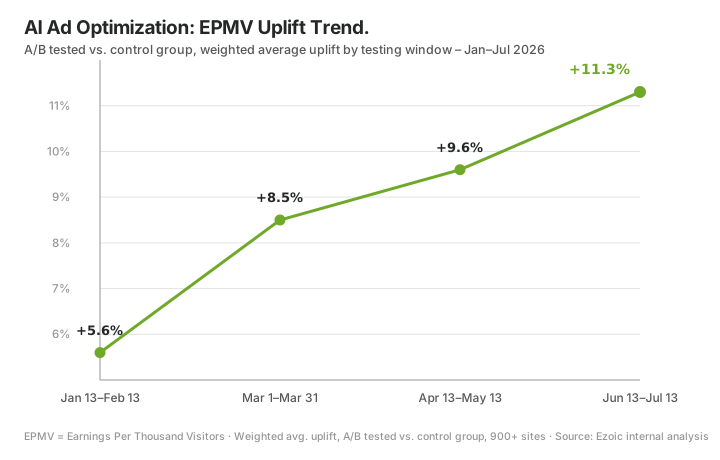
The Numbers: A Trend Of Compounding Growth.
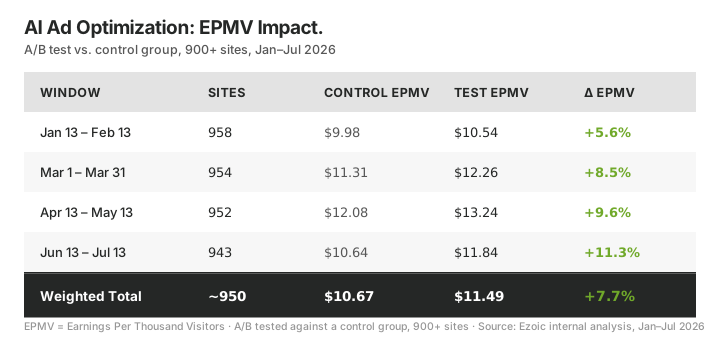
Most "optimization" tools deliver a one-time bump, then plateau. Ezoic's AI trends upward. In a head-to-head analysis from January through July 2026, sites with AI Ad Optimization enabled delivered a weighted +7.7% EPMV (Earnings Per Thousand Visitors) uplift compared to sites with the feature turned off. This analysis included a sample size of some of the largest sites on platform and the results are A/B tests with a control group.
More importantly, the gap widens as the AI learns. Uplift grew steadily month over month:
- January: +5.6% uplift
- July: +11.3% uplift
For some publishers, gains have been even more dramatic with revenue increases as high as 75%.
Implementation Just Got Easier: No More Placement IDs Required.
In the past, the biggest barrier to these gains was setup. Getting the most out of the AI meant a comprehensive placeholder configuration — the tedious work of managing placement IDs and calculating word-to-ad ratios by hand.
That changed. EzoicAds implementation is now virtually frictionless: placement IDs are no longer required. Paste a single script wherever an ad should appear, and it shows up right there which means no dashboard configuration needed. Read the updated implementation docs for the full setup.
The new best practice is just as simple: aim for one ad placeholder per viewport. Forget word counts and image ratios. Give the AI the opportunity by placing one placeholder per viewport, and it determines the optimal moments to fill each one based on demand, floors, and user behavior.
Placement IDs still exist for publishers who want granular control like for responsive sizing per device, exact positioning, per-location A/B testing. But they're now the advanced option, not the entry requirement. Removing that technical hurdle clears the path for the AI to start working in your favor immediately. A quick setup and a high-earning setup are no longer a trade-off.
Why The AI Wins.
There's no single "magic" setting. The AI's strength is identifying revenue opportunities too granular or too fleeting for a human to catch — monetizing previously under-utilized spaces and testing new configurations in real time. No single impression gets left on the table.
What This Means For You.
Whether you're a seasoned publisher or new to the platform, the goal is the same: maximize revenue without sacrificing user experience. With placement IDs removed as a requirement and setup simplified to one rule, the barrier to entry is gone.
If AI Ad Optimization has been toggled off, or the setup hasn't been touched in a while, there's no better time to flip the switch. Let the AI handle continuous optimization. Focus on the content.