
Agentic AI Is the Word of the Moment

At Cannes Lions this year, one word dominated nearly every conversation imaginable: agentic.
Holding companies had agentic strategies. DSPs had agentic roadmaps. Platforms unveiled agentic pilots. Somewhere between the keynotes and the rosé, the word lost whatever precise meaning it might have had. That's the problem with a buzzword at peak velocity: everyone claims it, nobody agrees on what it means, and the conversation moves on before anyone has to prove anything.
In ad tech right now, “agentic” describes everything from a chatbot answering support tickets to a fully autonomous system making real-time auction decisions across millions of sessions. Those are not even close to the same thing.
Ezoic didn’t pivot to agentic when it became a conference theme. These systems have been dialed and running in production for a while.
What “Agentic” Actually Means
Ask ten ad tech vendors what “agentic AI” means and you’ll get ten different answers, most of them shaped around whatever the vendor already built. All are technically defensible, but none capture the real considerations that will shape how programmatic advertising works going forward.
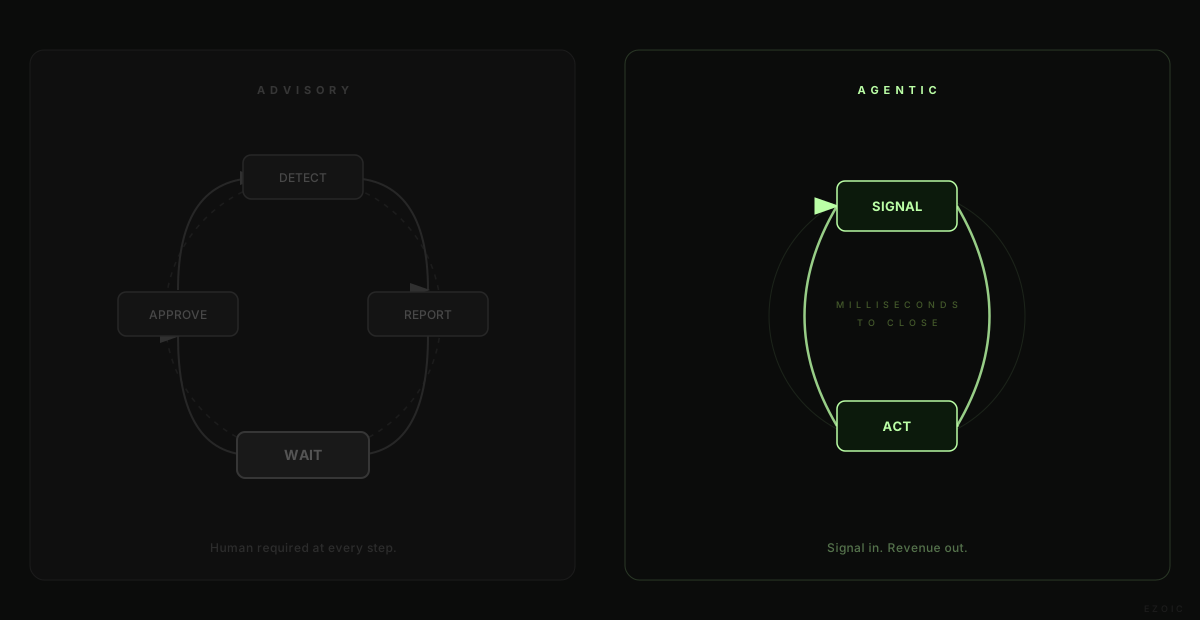
Here’s the definition that cuts through it: an agentic system doesn’t wait for a human to authorize the next move. It observes conditions and acts in real time, at scale, without a person in the loop at every step.
A thermostat reads the temperature and turns on the heat. A smart home system learns your schedule, anticipates when you’ll be cold, and adjusts before you notice the chill. Most “AI-powered” ad tech is still a thermostat. It generates recommendations and waits for a human to act. The systems running on Ezoic’s platform were never designed to wait.
The Systems We’ve Already Built
AI-Powered Campaign Creation
Ezoic’s Bidsystem uses AI to create and optimize advertiser campaigns automatically. Targeting and pacing happen without manual configuration at every decision point. The system makes those decisions, acts on them, and adjusts based on results. Advertisers get better-matched campaigns and publishers get cleaner auction dynamics.
Supply-Path Optimization Through Traffic Shaping
Ezoic’s Supply-Path Optimization (SPO) doesn’t just route bid requests. It decides, in real time, which requests are worth sending and to which partners. The system continuously evaluates signal quality and auction efficiency, then acts on that evaluation without human input.
An ad auction where noise has been removed is an auction where inventory gets the price it deserves.
Agentic Floor Optimization
Ezoic is building and testing agentic floor systems: price floors that adjust dynamically based on live market conditions rather than sitting static until a human intervenes. A floor that reads the market and responds in real time is a fundamentally different instrument. That difference is measured directly in publisher revenue.
Why the Gap Is Already Showing Up in Revenue
In Q1 2026, Ezoic publishers grew EPMV 27% year-over-year, in a traffic environment where organic sessions were declining across the open web. Ad load times dropped by a full second across the platform, with downstream improvements to Core Web Vitals and bounce rate. Those results come from systems continuously running and adjusting without waiting for human sign-off.
Dynamic bid floor pricing illustrates this directly. A floor set manually and revisited quarterly is a static guess. The floor Ezoic’s system sets is calibrated per user, per bidder, per hour. When demand shifts mid-afternoon, the floor shifts with it.
The Deeper Architecture
What separates a true agentic approach from a conventional “AI-assisted” one is what the model is permitted to do.
Recommendation engines output suggestions that still require human execution. That works when optimization cycles are slow and bad decisions are costly. Ad auctions don’t give you that kind of time. A single user session generates dozens of signals, and the window to act on them is measured in milliseconds.
Ezoic’s platform was built around this constraint from the start. Autonomous agents handle bid floor adjustments and demand path decisions at the individual visitor level, across every session and auction at scale. The philosophy is baked into the infrastructure: act on the signal in real time, or leave revenue behind.
What This Means for Publishers Today
The conversations happening in every programmatic strategy meeting right now will eventually produce real products. More of the ecosystem will get to agentic. But getting there takes years. By the time most platforms ship it, the businesses already running agentic infrastructure will have compounded optimization that can’t be replicated overnight.
Every cycle that waits for human input is a cycle that runs slower and leaves revenue in the auction that autonomous systems would have captured. The word “agentic” is new to most yet the compounding optimization behind it has been running on Ezoic’s platform for years.